

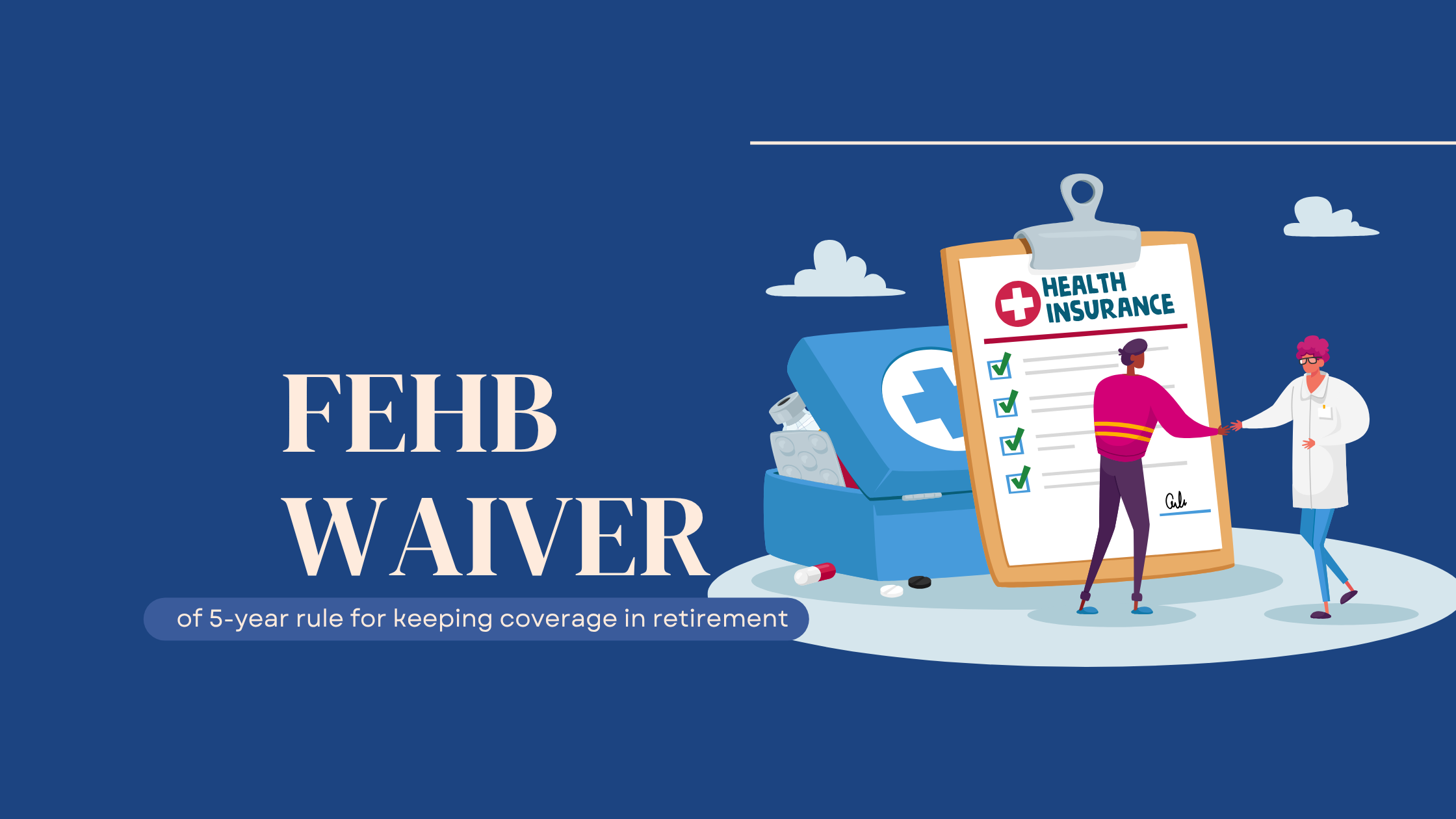
The waiver of the five-year rule for the Federal Employees Health Benefits (FEHB) in retirement is a special exception granted by the Office of Personnel Management (OPM) under specific circumstances. Normally, federal employees must be continuously enrolled in FEHB for the five years immediately preceding retirement or since their first opportunity to enroll to continue coverage post-retirement. However, OPM can grant waivers in limited cases.
How Federal Employees Can Keep Health Benefits in Retirement with Waiver of 5-Year Rule
OPM may approve a waiver if:
-
The employee retires under an early retirement or buyout authority known as the Voluntary Early Retirement Authority (VERA).
-
The employee has been continuously covered under FEHB since their agency’s latest statutory buyout authority or an OPM-approved early retirement/buyout authority.
-
The employee receives a buyout, takes early optional retirement, or faces involuntary separation due to a Reduction in Force (RIF), directed reassignment, reclassification to a lower grade, or abolishment of position.
This waiver is particularly important in 2025 as the federal workforce has undergone a drastic restructuring. The FEHB waiver is being granted to those who accepted a VERA buyout, a deferred resignation offer, or were involuntarily separated and eligible to retire either with a regular pension or a DSR (discontinued service retirement). However, with a deferred retirement, employees are ineligible for an FEHB plan after retiring, and this remains the case. Former workers might be able to receive a TCC (temporary continuance of coverage) if not able to retire without deferring. However, the full premium to a 2% administration fee must be paid by the former employee, making the cost much more of a burden. While in service, the government covers 72 to 75 percent of FEHB premiums.
Get expert help with federal employee retirement benefits -
How to Apply for a Waiver
-
Employees do not need to write to OPM if their agency has buyout authority.
-
If eligible, the agency will attach a memorandum to the retirement application stating that the employee meets the waiver requirements.
-
Employees should contact their Human Resources Office to determine eligibility and ensure proper documentation is submitted.
[CTA #2]
Breaking Down the Five-Year Rule for FEHB in Retirement
The FEHB five-year rule is a key requirement for federal employees who want to continue their Federal Employees Health Benefits (FEHB) coverage into retirement.
What Is the Five-Year Rule?
To keep FEHB coverage after retirement, an employee must:
-
Be enrolled in FEHB for the five years immediately before retirement or, if less than five years, for all service since their first opportunity to enroll.
-
Retire on an immediate annuity, meaning they start receiving their pension right away. With a postponed, but not deferred, annuity, the retiree can resume FEHB coverage upon collecting their pension if they met the requirements above.
How Previous Enrollment Counts
-
If an employee had breaks in service where they were not eligible for FEHB, previous enrollment can count toward the five-year requirement.
-
If an employee canceled FEHB coverage while continuously employed, they must restart the five-year period upon re-enrollment.
What Happens If You Don’t Meet the Rule?
-
You will get a 31-day extension of coverage at no cost.
-
You can convert to an individual policy or request Temporary Continuation of Coverage (TCC) for up to 18 months, but you must pay 100% of the premium plus a 2% administrative fee.
Need help with servicing federal employees and retirees?


Responses